

C’è un’energia particolare che si respira quando la musica diventa veicolo di urgenza sociale. Eccoci qui a parlare con Citron Sucré, un’artista francese con origini siberiane e ucraine che ha letteralmente infiammato il palco del nostro Festival delle Cose Belle 2025 con un’esplosione di sintetizzatori e batterie selvagge.
Citron è una cantante in continua evoluzione, una figura camaleontica che usa la sua arte per canalizzare esperienze personali ed esprimere ideali ferrei contro una società oppressiva, spesso radicata in una mentalità anti-woke. In attesa del rilascio del suo prossimo album, 206+, abbiamo avuto il piacere di intervistarla per comprendere meglio la sua visione del mondo.
Dalla violenza di genere alle incertezze della vita contemporanea, fino al valore imprescindibile della protesta sociale: ecco cosa ci ha raccontato.
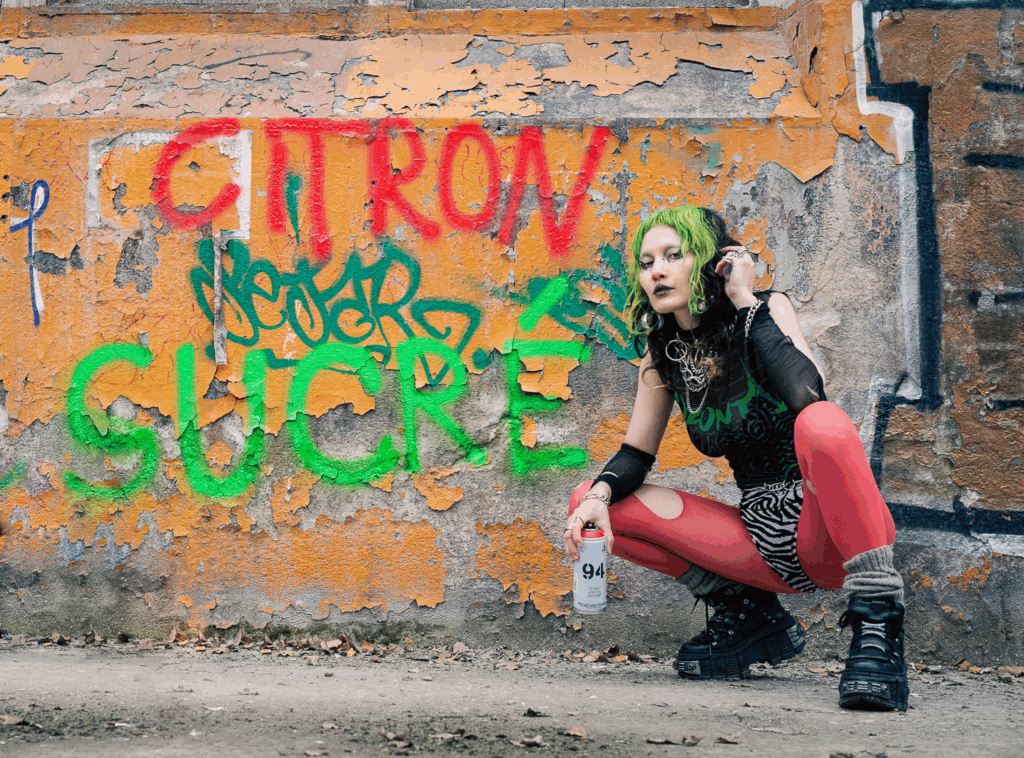
Citron Sucré è un’artista di Lione che cavalca con rabbia un electro pop abrasivo, a sostegno delle cause femministe e della resilienza generazionale. Ho letto che sei franco-russa, con origini siberiane. Ci vuoi parlare un po’ di più della tua storia e di come le due culture hanno influenzato la tua musica?
In realtà ho più di due culture dentro di me. Sono nata a San Pietroburgo, la seconda capitale della Russia. Ho famiglia in Ucraina e in Siberia e mi sono trasferita in Francia quando ero ancora bambina.
Tutte queste culture hanno plasmato la mia apertura mentale come individuo e la diversità della mia musica.
Uso quattro lingue quando scrivo le mie canzoni. Adoro mescolare influenze diverse, per il mio prossimo brano, ad esempio, mi piacerebbe che mia madre cantasse in stile tradizionale siberiano su un beat trance o hard techno.
So che alcuni puristi potrebbero dire che non si può semplicemente mescolare tutto ciò che si vuole, ma voglio che la mia musica rappresenti chi sono. Da piccola sono cresciuta ascoltando mia madre cantare canzoni siberiane, i miei nonni parlare ucraino e mio fratello ascoltare musica punk russa. Più tardi ho scoperto tutti i generi di musica europea e ora li sto semplicemente mescolando tutti insieme.
Ascoltando la tua discografia su Bandcamp mi sono sorpreso di come il tuo progetto dal 2020 ad oggi si sia evoluto di anno in anno, e abbia esplorato diversi sottogeneri dell’elettrocnica: dal synth pop allo electro post-punk, toccando anche la techno. Inoltre, anche l’estetica del tuo progetto è un elemento che si è modificato abbastanza nel tempo. Possiamo dire che la metamorfosi è parte integrante della tua identità artistica? In particolare, come pensi che ti evolverai tra dieci anni?
La metamorfosi è sicuramente parte della mia identità sia personale che artistica.
Amo evolvermi, esplorare, sperimentare, imparare cose nuove. La mia più grande paura è rimanere ferma, fare sempre la stessa cosa.
Anche se la mia estetica continua ad evolversi, credo nell’importanza di avere un segno artistico riconoscibile, sia dal punto di vista musicale che visivo. Ci sono alcuni elementi che si ritrovano sempre nel mio lavoro: l’alternanza tra fragilità e rabbia, femminile e maschile, melodie pop coinvolgenti e linee di basso abrasive.
Visivamente, ci sono sempre stati colori vivaci e fluorescenti, adoro i colori.
Non posso davvero dire come evolverò tra dieci anni, perché sarebbe contrario alla mia personalità: quello che faccio dopo è sempre una reazione a quello che ho fatto prima. Ma so che il mio prossimo EP o album sarà completamente diverso dal precedente.
Il tuo recente singolo “t’es qu’un gros FDC” (letteralmente “sei solo un gran coglione”) affronta un episodio di molestia che hai vissuto in prima persona, denunciando l’insistenza e la prepotenza maschile come una minaccia concreta per le donne. Ci puoi raccontare meglio il tuo desiderio di trasformare la tua esperienza in musica? Come ti sei sentita a portare sul palco un tema così personale e spiacevole?
Questo brano parla di un’aggressione che è capitata a me e a una mia amica, che è stata molestata da un uomo che è diventato violento quando lei ha detto di no mentre eravamo in vacanza.
È solo una storia, ma succede continuamente, a tutte le donne, ogni giorno. Potrei farti tanti altri esempi che mi capitano quasi ogni giorno.
Questo è stato solo l’incidente più violento che mi è successo mentre stavo scrivendo il mio nuovo album.
Sono contenta di avere l’opportunità di esorcizzare tutta la mia rabbia verso la violenza maschile sul palco, perché altrimenti dovrei tenerla tutta dentro.
Esibirmi mi ha aiutato ad acquisire maggiore sicurezza nelle mie battaglie. Prima lasciavo correre molte cose, ma da quando sono sul palco e rappresento altre donne, sento la responsabilità di lottare nella mia vita quotidiana e di mettere in pratica ciò che dico sul palco.
Il titolo “t’es qu’un gros FDC” significa “sei solo un gran coglione”, è una frase molto cruda e diretta, e ho voluto mantenere quell’energia nella canzone. E se alcuni uomini si sentono insultati mentre la ascoltano, probabilmente sono proprio dei « gros FDC » e devono fare un esame di coscienza.
Le donne sono quotidianamente vittime di abusi legati al maschilismo e ai suoi derivati tossici, come la cultura incel. Questa tossicità raggiunge il suo apice nella tragedia del femminicidio, come descritto bene anche nella miniserie Adolescence. Come anche tu stessa hai sottolineato in t qu’un gros FDC, per affrontare il problema è necessario educare il mondo maschile al rispetto e alla gentilezza nei confronti delle donne e, più in generale, di tutte le persone. Tuttavia, questo non è semplice da realizzare, soprattutto nel contesto sociale/politico attuale. In che modo pensi che la società possa contribuire concretamente allo smantellamento della cultura antifemminista?
Durante il Festival delle Cose Belle, ho tenuto un workshop su questo argomento. Come donna che subisce la misoginia nella vita quotidiana, il mio primo istinto è quello di combattere tutti questi incel. Ma c’era un uomo nel gruppo che ha offerto una prospettiva diversa. Ha sottolineato che molte di queste persone sono isolate, stanno su Discord o sui canali YouTube degli incel nelle loro cantine, frustrate perché le donne non sono interessate a loro e forse l’isolamento è la radice del problema, qualcosa che deve essere affrontato.
Allora, come diventano misogini gli uomini? Certo, possiamo dire che la scuola e l’educazione dei genitori giocano un ruolo enorme, ed è vero, ma oggi imparano soprattutto da Internet. I genitori e gli insegnanti non sono nemmeno consapevoli di quanto sia profondo il problema, proprio come mostra la serie Netflix Adolescence. Ascoltano persone come Andrew Tate e poi si copiano a vicenda, molestando le donne online.
Ad esempio, ho appena pubblicato un video dicendo: “Ho scritto una canzone per combattere il patriarcato”, e così tanti incel sono venuti a insultarmi solo per far sentire meglio i loro fragili ego. Ego fragili davvero, perché “incel” significa celibe involontario. Sono solo arrabbiati perché oggi le donne possono scegliere con chi uscire e loro non vengono scelti. Vogliono che il patriarcato persista in modo da poter ottenere un certo controllo sulle donne. La cosa spaventosa è che la maggior parte di questi incel sono molto giovani e vedono qualsiasi relazione con le donne come un gioco di dominio invece che come uno scambio reciproco.
A mio parere, la prima cosa che dovremmo fare, e quando dico “noi” intendo i governi, è smantellare quelle reti di comunicazione: chiudere gli account degli incel, come ha fatto Instagram con Andrew Tate. Ma è difficile da controllare perché ci sono così tanti canali underground e indipendenti fuori dalla nostra portata. Stiamo affrontando il lato negativo della rivoluzione di Internet e del progresso tecnologico che sta avanzando più velocemente della nostra capacità di gestirlo.
La seconda cosa, che è stata suggerita dalla persona che ha partecipato al mio workshop, sarebbe quella di ricollegare queste persone alla vita reale, di portarle nelle comunità, insegnare loro come interagire in modo sano e aiutarle a trovare cose da fare al di fuori dell’odio. L’odio deriva sempre dall’ignoranza e dal non interagire abbastanza con il mondo e con persone diverse.
Una volta ho letto uno studio che dimostrava che le nuove generazioni faticano a sviluppare empatia perché interagiscono principalmente online. L’empatia si costruisce nella vita reale, vedendo come le proprie azioni influenzano la persona che si ha di fronte. Questo è un altro problema: significa che in futuro potremmo avere sempre meno empatia.
Ci sono già sociopatici e psicopatici nelle nostre società e temo che il loro numero aumenterà. Questi termini non significano necessariamente “pazzi”; descrivono persone che non provano alcun senso di colpa o rimorso quando fanno del male agli altri. Questo mi preoccupa, perché una società senza empatia è pericolosa, è come regredire all’età della pietra. Vediamo già più persone che mostrano tendenze sociopatiche e il nostro mondo spesso premia questo comportamento. I più ricchi e potenti spesso non provano alcun senso di colpa o rimorso quando sfruttano gli altri. È un riflesso spaventoso di dove potremmo andare a finire.
A breve pubblicherai il tuo prossimo album 206+, che conterrà t qu’un gros FDC, il tuo ultimissimo singolo ct trop tArd //…/ ed altri brani furiosi. Puoi raccontarci qualcosa di più su questa futura pubblicazione e sull’idea artistica che la ispira?
Peugeot 206+ è il modello della mia prima auto, in quella macchina sono successe tante cose e le racconto tutte in questo album. È un viaggio sonoro: un’intensa avventura electro emo pop punk in cui ogni suono riecheggia il caos delle nostre vite. Il progetto esplora i molti volti della femminilità e le sfide della nostra generazione. Tra feste sfrenate e momenti di dubbio, aggressioni sessiste e storie d’amore complicate, emancipazione e scoperta di sé, ogni brano è sia una testimonianza intima che un inno alla resilienza.
La Peugeot 206+ si è trasformata in un furgone da tour, uno studio di registrazione e persino uno strumento musicale. Abbiamo costruito una batteria ibrida con parti di auto di scarto, conferendo un tocco grezzo, metallico e industrial tedesco alle nostre composizioni DnB. Questo nuovo album è il grido del mio cuore, il mio inno alla libertà. Tra ritmi drum’n’bass, bassi potenti e melodie coinvolgenti, vi porto in un mondo dove il femminismo, le feste e il mal d’amore si scontrano con l’energia punk. Parla di vittorie, ferite e sogni, e invita tutti a ballare e a ribellarsi con noi.
Ogni canzone è una tappa lungo la strada: un’avventura vissuta, con momenti di crisi, risate e quel bisogno primordiale di urlare alla vita. L’energia grezza dei ritmi incontra testi taglienti, personali ma universali, che descrivono cosa significa essere una ragazza nel mondo di oggi, un mondo che sta ancora cambiando troppo lentamente.
Questo progetto è per tutti coloro che vanno controcorrente, che vivono la vita a tutto volume. La nuova configurazione live porta la potenza grezza della batteria dal vivo sincronizzata con bassi sintetizzati imponenti. Sul palco, aspettatevi uno spettacolo esplosivo in cui la danza e la ribellione si scontrano. 206+ è un invito aperto a unirsi alla nostra comunità, a celebrare la differenza e a rivendicare il nostro spazio.
La Francia sta attraversando, negli ultimi tempi, una crisi di governo, i cui risvolti nella società sono ancora tutti da scoprire. Tu che vivi in prima persona la realtà francese e le sue molteplici sfaccettature, potresti raccontarci come tu e le persone intorno a te state vivendo questo momento di incertezza e protesta
Viviamo in un’epoca in cui il governo si rifiuta di ascoltare la gente, il che porta a crisi politiche, votiamo, protestiamo, ma il governo spesso agisce contro ciò che è stato deciso e ignora semplicemente le manifestazioni. Immagino che questo sia il modo attuale di fare politica. Mi sembra che ci sia un forte parallelismo
con ciò che sta accadendo anche negli Stati Uniti. Nel mondo artistico, spesso se ne parla con amarezza (soprattutto ora, con i primi ministri che cambiano così spesso), ma in fondo tutti hanno paura di ciò che potrebbe accadere in futuro.
Negli ultimi mesi le piazze di mezza Europa sono tornate a vivere con mobilitazioni permanenti per supportare la resistenza palestinese e chiedere un cambio di rotta netto nelle politiche interne ed estere dei governi. Questo movimento, nato per supportare la causa palestinese, sembra crescere e mettere in discussione vari aspetti della società che viviamo, contestando i fondamenti stessi delle società liberiste che abitiamo. Dall’altro lato, le proteste spesso sono state additate come velleitarie e inconcludenti, soprattutto dalle stesse istituzioni che vengono attaccate. Tu, come cittadina e artista, come risponderesti a chi sminuisce il ruolo della protesta civile?
Tutti i progressi sociali e le rivoluzioni hanno sempre avuto origine dalla protesta civile e dalla voce della gente.
I politici sanno quanto possano essere potenti le proteste, ed è proprio per questo che cercano di sminuirle, per far credere alla gente che siano inutili. In alcuni paesi, esprimersi o scendere in piazza può essere pericoloso, eppure la gente continua a farlo, perché rimane l’unico modo reale per creare un cambiamento. Ci vorrà molto più che definirle “inutili” per impedire alle persone di lottare per ciò che è giusto.
Al Festival delle Cose Belle hai spaccato tutto con un live energico che ha mescolato pezzi storici e più recenti a messaggi femministi dall’altissima carica trasformante. Che sensazioni hai avvertito alla Valle dell’Om rispetto alla tua arte e al tuo messaggio? Quale pensi sia il ruolo di piccoli festival indipendenti come il nostro nella scena artistica contemporanea?
Grazie, mi sono divertita tantissimo sul palco, è stata un’esperienza incredibile perché l’energia continuava a rimbalzare tra me e il pubblico, ed era la mia prima volta in Italia. Mi sono sentita profondamente connessa a tutti, anche se non parlavo la loro lingua. È questo che amo dei tour fuori dalla Francia: la connessione avviene a un altro livello.
Anche se i miei testi sono in francese, il pubblico ha capito il messaggio, ho sentito che tutti si identificavano con le canzoni e abbiamo vibrato tutti insieme. È stato davvero bellissimo.
Credo che i piccoli festival indipendenti siano essenziali, non solo dal punto di vista artistico, ma anche sociale. Sono luoghi in cui avvengono conversazioni autentiche e riflessioni collettive, come dei think tank per il progresso sociale. Condividiamo idee, energia e consapevolezza che poi possiamo riportare nel mondo.
La comunità che si forma durante questi festival sembra uno scorcio di un futuro migliore, una sorta di micro-società costruita sul rispetto, la creatività e la cura. Mostra come potrebbe essere il mondo se l’empatia e la libertà guidassero davvero le nostre vite. Penso che sia per questo che il legame al Festival delle Cose Belle è stato così forte: tutti noi, a modo nostro, stiamo cercando di portare più empatia e meno oppressione nella società.
Se dovessi aggiungere una cosa: continuate ad andare ai piccoli festival e concerti indipendenti, è lì che accadono le cose più belle, e possono continuare solo se li sostenete. Ascoltate musica su piattaforme legali come Deezer e acquistate brani su Bandcamp, perché queste piattaforme sostengono gli artisti in modo molto più equo rispetto ad altre.
*** English version (original) ***
1. Citron Sucré is an artist from Lyon who fiercely rides an abrasive electro pop wave, supporting feminist causes and generational resilience. I read that you are French-Russian, with Siberian roots. Could you tell us a bit more about your background and how these two cultures have influenced your music?
I actually have more than two cultures in me. I was born in Saint Petersburg, the second capital city of Russia. I have family in Ukraine and in Siberia, and I moved to France when I was still a child.
All of these cultures shaped my open-mindedness as an individual and the diversity of my music.
I use four languages when writing my songs. I love to mix different influences, for my next track, for example, I’d love to have my mom sing in a Siberian traditional style over a trance or hard techno beat.
I know some purists might say you can’t just mix whatever you want, but I want my music to represent who I am. When I was little, I grew up hearing my mom sing Siberian songs, my grandparents speaking Ukrainian, and my brother listening to Russian punk music. Later, I discovered all kinds of European music, and now I’m just blending it all together.
2. While listening to your discography on Bandcamp, I was surprised by how your project has evolved year after year since 2020, exploring various subgenres of electronic music: from synth pop to electro post-punk, even touching on techno. Also, the visual aesthetic of your project seems to have changed quite a bit over time. Is it fair to say that metamorphosis is an integral part of your artistic identity? And specifically, how do you imagine you will evolve in ten years?
Metamorphosis is definitely a part of both my personal and artistic identity.
I love evolving, exploring, experimenting, learning new things. My biggest fear is staying still, doing the same thing over and over again.
Though my aesthetic keeps evolving, I believe in having a recognizable artistic signature, both musically and visually. There are a few elements you can always find in my work: this alternation between fragility and anger, feminine and masculine, addictive pop melodies and abrasive basslines.
Visually, there have always been bright, fluorescent colors, I just love colors.
I can’t really say how I’ll evolve in ten years, because that would go against my personality: what I do next is always a reaction to what I did before.
But I do know that my next EP or album will be completely different from the previous one.
3. Your recent single t’es qu’un gros FDC (literally “you’re just a big asshole”) addresses an episode of harassment you experienced firsthand, denouncing male insistence and aggression as a real threat to women. Could you tell us more about your desire to turn that experience into music? How did you feel to bring such a personal and painful subject onto the stage?
This track talks about an assault that happened to me and a friend, she was harassed by a man who became violent when she said no while we were on vacation.
It’s just one story, but it happens all the time, to all women, every day. I could give you so many other examples that happen to me almost every day. This one was just the most violent incident that happened while I was writing my next album.
I’m glad I have the opportunity to exorcise all my anger toward male violence on stage, because otherwise I would have to keep it all inside. Performing has helped me become more confident in my fights. Before, I used to let many things slide, but since being on stage and representing other women, I feel a responsibility to fight in my everyday life and apply what I say on stage.
The title “t’es qu’un gros FDC” means “you’re just a big asshole”, it’s a very raw and direct phrase, and I wanted to keep that energy in the song. And if some men feel insulted while they listen to it, probably they are « gros FDC » and have to check themselves.
4. Women are daily victims of abuse rooted in machism and its toxic offshoots, such as incel culture. This toxicity reaches its peak in the tragedy of femicide, as also well portrayed in the recent Netflix miniseries Adolescence. As you also highlighted in t’es qu’un gros FDC, addressing this issue requires educating men to respect and show kindness toward women, and, more broadly, toward all people. However, this is not easy to achieve, especially in today’s socio-political climate. In your view, how can society concretely contribute to dismantling antifeminist culture?
During the Festival delle Cose Belle, I was hosting a workshop on this topic. As a woman who experiences misogyny in my everyday life, my first instinct is to just fight against all those incels. But there was a man in the group who offered a different perspective. He pointed out that many of these people are isolated, staying on Discord or incel YouTube channels in their basements, frustrated because women are not interested in them and maybe isolation is the root of the problem, something that needs to be addressed.
So how do men become misogynistic? Of course, we can say that school and parenting play a huge role, and that’s true, but today, they mostly learn from the internet. Parents and teachers aren’t even aware of how deep the problem goes, just like the Netflix series Adolescence shows. They listen to people like Andrew Tate and then copy each other, harassing women online.
For example, I just posted a video saying, “I wrote a song to fight against patriarchy,” and so many incels came to insult me just to make their fragile egos feel better. Fragile egos indeed, because “incel” means involuntarily celibate. They’re just angry that women can choose who they want to date today, and that they’re not being chosen. They want patriarchy to persist so they can gain some control over women. What’s scary is that most of these incels are very young, and they view any relationship with women as a game of domination instead of a mutual exchange.
In my opinion, the first thing we should do, and when I say “we,” I mean governments, is dismantle those communication networks: shut down incel accounts, like Instagram did with Andrew Tate. But that’s hard to control because there are so many underground, independent channels out of reach. We’re facing the downside of the internet revolution and technological progress that’s moving faster than our ability to handle it.
The second thing, which was the suggestion from the person in my workshop, would be to reconnect these people with real life, to bring them into communities, teach them how to interact in a healthy way, and help them find things to do outside of hate. Hate always comes from ignorance and from not interacting with the world and different people enough.
I once read a study showing that new generations struggle to develop empathy because they mainly interact online. Empathy is built in real life, by seeing how your actions affect the person in front of you. That’s another issue: it means we might have less and less empathy in the future.
There are already sociopaths and psychopaths in our societies, and I fear those numbers will rise. These terms don’t necessarily mean “crazy people”; they describe people who feel no guilt or regret when doing harm to others. That worries me, because a society without empathy is a dangerous one, it’s like regressing to the Stone Age. We already see more people showing sociopathic tendencies, and our world often rewards that behavior. The richest and most powerful often feel no guilt or regret when exploiting others. That’s a scary reflection of where we might be heading.
5. You will soon be releasing your upcoming album 206+, which will include t qu’un gros FDC, your latest single ct trop tArd //…/, and other intense new tracks. Can you tell us more about this upcoming release and the artistic concept behind it?
Peugeot 206+ is the model of my first car, so many stories happened inside that car, and I’m telling them all in this album. It’s a sonic road trip: an intense electro emo pop punk adventure where every sound echoes the chaos of our lives. The project explores the many faces of femininity and the challenges of our generation. Between wild parties and moments of doubt, sexist assaults and messy love stories, emancipation and self-discovery each track is both an intimate testimony and a hymn to resilience.The Peugeot 206+ turned into a tour van, a recording studio, and even a musical instrument. We built a hybrid drumkit out of junkyard car parts, delivering a raw, metallic, German industrial punch to our DnB driven compositions. This new album is my heart’s cry, my anthem to freedom. Between drum’n’bass beats, fat basslines, and addictive melodies, I’m taking you into a world where feminism, partying, and heartbreak collide with punk energy. It’s about victories, wounds, and dreams, and it invites everyone to dance and rise up with us.
Each song is a pit stop on the road: a lived adventure, with breakdowns, laughter, and that primal urge toscream at life. The raw energy of the beats meets sharp, personal yet universal lyrics, mapping what it means to be a girl in today’s world, a world that’s still changing too slowly.
This project is for everyone who rides against the grain, who lives life at full blast. The new live setup brings the raw power of live drums synced with massive bass synths. On stage, expect an explosive show where dance and rebellion collide. 206+ is an open invitation to join our community, to celebrate difference and claim our space.
6. France has recently been going through a governmental crisis, the social consequences of which are still unfolding. Being one who lives the French reality up close, in all its complexity, could you tell us how you and those around you are navigating this time of uncertainity and protest?
We live in a era where the governement refuses to listen to people, which leads to political crisis, we vote, we protest but the government often acts against what was decided and simply ignores the demonstrations. I guess that’s the current way of doing politics. I feel like there’s a strong parallel with what’s happening in the United States too. In the artistic world, people often joke about it bitterly (especially now, with prime ministers changing so frequently), but deep down, everyone is afraid of what might come next.
7. In recent months, the squares across much of Europe have come alive again with ongoing demonstrations to support the Palestinian resistance and call for a clear change in the domestic and foreign policies of governments. This movement, born to support the Palestinian cause, seems to be growing and challenging various aspects of the society we live in, questioning the very foundations of the liberal societies we inhabit. On the other hand, these protests have often been dismissed as futile and ineffective, especially by the political institutions. As a citizen and artist, how would you respond to those who belittle the role of civil protest?
All social progress and revolutions have always been rooted in civil protest and people raising their voices.
Politicians know how powerful protests can be, that’s exactly why they try to belittle them, to make people believe they’re useless. In some countries, speaking out or taking to the streets can be dangerous, yet people still do it, because it remains the only real way to create change. It will take much more than calling it “futile” to stop people from fighting for what’s right.
8. At the Festival delle Cose Belle 2025, you absolutely rocked the stage with an energetic live show that blended classic hits and newer songs with powerful feminist messages full of transformative energy. What feelings did you experience at Valle dell’Om regarding your art and your message? What do you think is the role of small independent festivals like ours in the contemporary artistic scene?
Thank you, I had such a blast on stage, it was an incredible experience because the energy kept bouncing between me and the audience, and it was my first time playing in Italy. I felt deeply connected to everyone, even though I didn’t speak their language. That’s what I love about touring outside France: the connection happens on another level.
Even if my lyrics are in French, the audience understood the message, I could feel that everyone related to the songs, and we all vibed together. It was truly beautiful.
I believe small independent festivals are essential, not only artistically but also socially. They’re places where real conversations and collective reflection happen, like think tanks for social progress. We share ideas, energy, and awareness that we can then bring back into the world.
The community that forms during these festivals feels like a glimpse into a better future, a kind of micro-society built on respect, creativity, and care. It shows what the world could look like if empathy and freedom truly guided our lives. I think that’s why the connection at Festival delle Cose Belle felt so strong, we’re all trying, in our own ways, to bring more empathy and less oppression into society.
If I had one thing to add: keep going to small independent festivals adn concerts, that’s where the most beautiful things happen, and it can only continue if you support them. Stream music on legal platforms like Deezer and buy tracks on Bandcamp, because these platforms support artists much more fairly than others.